
India's net direct tax collections increased by 5.12 per cent to over Rs 23.40 lakh crore in the 2025-26 fiscal year, but this figure still fell short of the revised budget target of Rs 24.21 lakh crore, primarily due to income tax cuts implemented earlier in the year.

'Since the category has a limited track record, assess the fund manager's experience across equity and debt market cycles rather than relying only on past returns.'

Across all 10 schemes from FY24 to FY26, print media captured 58.8 per cent of the total ad spending, followed by electronic media at 19.5 per cent, digital media at 14.6 per cent, and outdoor media at 7.2 per cent.

75% of India's 60 million digital-payment merchants have never recorded a transaction above 2,000.

Samajwadi Party president Akhilesh Yadav has criticised the BJP government's proposed Merchant Discount Rate (MDR) on high-value UPI transactions, calling it a "chungi" (tax) on digital payments. He alleged the move was an attempt to extract money from people's transactions, contradicting the government's goal of a trillion-dollar economy. The new UPI framework will impose a 0.4% MDR on person-to-merchant transactions above Rs 2,000 from October 15, with certain sectors having a flat Rs 5 MDR.

India's entry-level passenger vehicle market is experiencing a significant recovery, with mini car wholesales surging 86.3 per cent year-on-year in the first half of FY27, driven by improved affordability and stronger overall demand.

The Congress party has strongly refuted government claims that its MPs on the Parliament Standing Committee on Finance supported a fee on high-value UPI payments. Congress leaders, including Gaurav Gogoi and Manish Tewari, stated that the "UPI tax" proposal was not specifically discussed by the committee, accusing the Modi government of diverting attention from public backlash and appeasing US companies. The government, however, cited the committee's report which pressed for a tiered Merchant Discount Rate (MDR) framework.

Five southern states are stepping up coordination on delimitation, tax devolution and language issues, reviving calls for a stronger collective South platform.

WazirX founder Nischal Shetty stated, "We have outdone ourselves, but it is a journey we are still on, and there is a long way to go," reflecting on the cryptocurrency exchange's year-long journey since restarting operations after a cyberattack and restructuring.

As India marks a decade of the Goods and Services Tax (GST), the focus is shifting towards enhancing efficiency through artificial intelligence, data sharing, and process simplification. The reform, which unified India's indirect tax system, has significantly broadened the tax base and boosted revenues, with future plans including a streamlined two-tier rate structure and continued technological integration to reduce compliance costs and combat evasion.
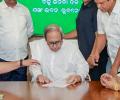
BJD chief Naveen Patnaik has voiced concerns over the Centre's decision to introduce Merchant Discount Rate (MDR) charges on UPI transactions above Rs 2,000 from October 15, urging protection for small traders and common people. This move has sparked a political debate, with the BJP defending the charges as beneficial for digital infrastructure and largely not impacting consumers, while the Congress and traders' associations criticise it as an additional burden.
Government sources clarify that the 0.4% merchant discount rate (MDR) on UPI transactions above Rs 2,000, effective October 15, will not be passed on to consumers. The charge, paid by merchants, aims to create a sustainable revenue framework for the digital payments ecosystem, with funds shared among banks and UPI entities. Small merchants using QR codes for up to Rs 1 lakh monthly are exempt.

The Supreme Court has refused to grant an interim stay on the imposition of Merchant Discount Rate (MDR) on UPI person-to-merchant transactions exceeding Rs 2,000, which is set to take effect from October 15. The court has agreed to examine the challenge to this new fee and has issued notices to the Centre, RBI, and NPCI, seeking their responses within four weeks. A Public Interest Litigation (PIL) argues that the levy lacks statutory safeguards, transparency, and public consultation, and could adversely affect merchants and consumers.

Compare premiums, claim settlement ratios, exclusions, waiting periods and surrender provisions.

The data may include details of foreign bank accounts, investment accounts, certain financial investments, interest income, dividends and other specified financial income held by Indian tax residents abroad.

Recent changes to tax exemptions and allowances, including increased education, hostel, and HRA limits, have made the old tax regime more competitive against the new regime, prompting salaried employees to re-evaluate their choice for the current financial year.

Venu Srinivasan, a trustee and Tata Sons nominee director, has requested a regulatory inquiry into the governance of the Sir Dorabji Tata Trust, one of the charitable entities controlling 66 per cent of Tata Sons, citing concerns over trustee appointments and the trusts' involvement in commercial affairs.

Automobile dealers in India are reporting healthy bookings ahead of Navratri and Dussehra, with the Federation of Automobile Dealers Associations (Fada) indicating strong confidence in a pickup in deliveries from mid-October, despite a high base from last year's GST-led surge.

Ramlila Maidan, recently designated as one of Delhi's new protest sites, is proving to be a costly and difficult option for demonstrators. With no free dates for the next two and a half months and booking fees exceeding Rs 1 lakh, it contrasts sharply with the previously free Jantar Mantar. The ground, rich in political history, also poses logistical challenges due to its busy commercial location and impact on traffic.

India's Chief Economic Advisor V Anantha Nageswaran stated that the country's balance of payments (BoP) pressure is expected to remain a continuous challenge due to rising imports, commodity dependence, high global interest rates, and intense competition for capital.

Indian companies are increasingly turning to share buybacks as a preferred payout strategy, driven by recent tax framework changes that make them more tax-efficient for non-promoter shareholders and a fall in stock prices.

Moody's Ratings has sharply increased India's GDP growth forecast for fiscal 2026-27 to 7 per cent, making it the fastest among G20 economies, driven by economic resilience despite the Middle East conflict. However, the agency flagged significant inflation risks stemming from elevated oil prices and potential El Nino disruptions.

Digital services major Jio Platforms is anticipated to list on the stock exchange by the end of October, with an estimated enterprise valuation of USD 143-146 billion, making it India's largest public offer at around USD 3.8 billion.

The Finance Ministry has clarified that the decision to impose a 0.4% Merchant Discount Rate (MDR) on UPI transactions above Rs 2,000 was made independently, refuting claims of foreign influence. The ministry stated the policy aims to build a self-sustaining digital payments ecosystem, with MDR funding infrastructure and supporting small merchants.

Opposition parties, including Congress, TMC, and RJD, have strongly criticised the government's decision to impose a 0.4% Merchant Discount Rate (MDR) on UPI transactions exceeding Rs 2,000 made to merchants. They allege the move is a result of "American imperialism" and will lead to increased commodity prices, while the government maintains the charge is on merchants and not consumers, with person-to-person transactions remaining free.

The Retailers Association of India (RAI) has voiced concerns that the government's new 0.4 per cent Merchant Discount Rate (MDR) on UPI transactions above Rs 2,000 could reverse the progress of digital payment adoption among small retailers. This fee, effective October 15, places the burden on merchants operating on thin margins, potentially pushing them back to cash transactions and undermining the government's formalisation agenda, especially ahead of the festive season.
The opposition has strongly criticised the government's decision to introduce a 0.4% Merchant Discount Rate (MDR) on UPI transactions above Rs 2,000 for merchants, effective October 15. They allege the move is a result of US pressure and will lead to increased commodity prices, calling it a "betrayal" of the common man. The government, however, clarifies that customers will not be charged, and the MDR applies only to merchants for larger transactions.

Buying a policy is only the beginning. Health insurance is a long-term commitment that needs regular review as your age, health needs and family circumstances change.

The Indian government has introduced a 0.4% transaction fee on UPI payments above Rs 2,000 for merchants, effective October 15, sparking a political row. The Congress party has labelled it a "Modi tax" and accused the government of succumbing to US pressure, while the BJP has defended the move, clarifying that consumers will not be charged and small vendors are protected. The finance ministry reiterated that the charge is on merchants, not customers.
Ask tax gurus Mihir Tanna, Samkit Maniar, Vivek Lala, Anil Rego, T S Khurana and Mahesh Padmanabhan your Budget-related tax questions

India's passenger vehicle sales are estimated to have surged by approximately 35 per cent to about 4.5 lakh units in August, driven by strong performances from major automakers like Maruti Suzuki India, Tata Motors Passenger Vehicles, and Mahindra & Mahindra, with the industry entering the festive season with optimism.
The Congress party has strongly criticised the Modi government's decision to introduce a 0.4% Merchant Discount Rate (MDR) on UPI transactions over Rs 2,000, alleging it is a result of US pressure to benefit American card companies. The party also linked this move to broader US actions against India, including tariffs and H-1B visa issues, coining the term "Narendra's Ongoing Trump Appeasement." The government, however, clarified that consumers will not bear the charge, which applies only to merchants.

It is important to understand that the rupee's appreciation, driven by the 2013 special swap scheme, reduced India's import costs for petroleum, oil, and gold, points out Dr Ashwani Mahajan, National Co-Convenor, Swadeshi Jagaran Manch.

The Indian government has introduced a 0.4% fee on UPI transactions above Rs 2,000 for merchants, effective October 15, sparking strong opposition from political parties and traders. Despite accusations of foreign influence and demands for a rollback, the finance ministry and top functionaries have stated there will be no reversal, citing the need for a self-sustaining digital payments ecosystem.

Global brokerage Jefferies forecasts a double-digit compound annual growth rate (CAGR) for India's defence spending, estimating a cumulative domestic opportunity of over $60 billion across four years, driven by geopolitical tensions and the government's indigenisation push.

The Finance Ministry has clarified that the 0.4 per cent Merchant Discount Rate (MDR) on UPI transactions above Rs 2,000, effective October 15, is not expected to increase cash transactions or cause inflation. The ministry also dismissed allegations of US pressure influencing the decision, asserting that the policy aims to promote RuPay credit cards within the UPI ecosystem, and a monitoring mechanism will ensure the MDR burden is not passed on to consumers.

Rural commercial vehicle (CV) registrations have consistently outpaced urban sales from April to July 2026, driven by a significant diversification of the rural economy and the positive impact of GST-led consumption, according to experts and data from Fada.

As India's festive season approaches, passenger vehicle dealers are seeing a notable increase in inventories, yet discounts remain surprisingly moderate compared to previous years, signalling a tighter demand-supply balance in the automotive market.
The opposition has intensified its criticism of the government's decision to impose a 0.4 per cent Merchant Discount Rate (MDR) on UPI transactions above Rs 2,000, effective October 15. Leaders like Rahul Gandhi and Jairam Ramesh allege the move is a result of US pressure, particularly from American card companies, and demand an immediate rollback, warning of increased costs for consumers.
The Congress party has criticised the Modi government over a notification regarding UPI transactions, alleging it paves the way for imposing fees, especially on transactions above Rs 2,000. Rahul Gandhi claimed the government is surrendering to American pressure, while Mallikarjun Kharge highlighted the potential burden on common citizens amidst inflation. The government's notification prohibits charges on UPI transactions up to Rs 2,000 but remains silent on higher amounts, sparking fears of a "Digital Payments Tax."
